Including first/co-first work in Nature, Science, Cell, Cancer Cell, and Nature Biotechnology.


People · Culture · Trajectories
Founding a laboratory at Penn
Science advances
when people do.
We are building an interdisciplinary home for scientists who are curious across scales, generous with ideas, and motivated to turn mechanism into living medicine.
Join the founding team ↗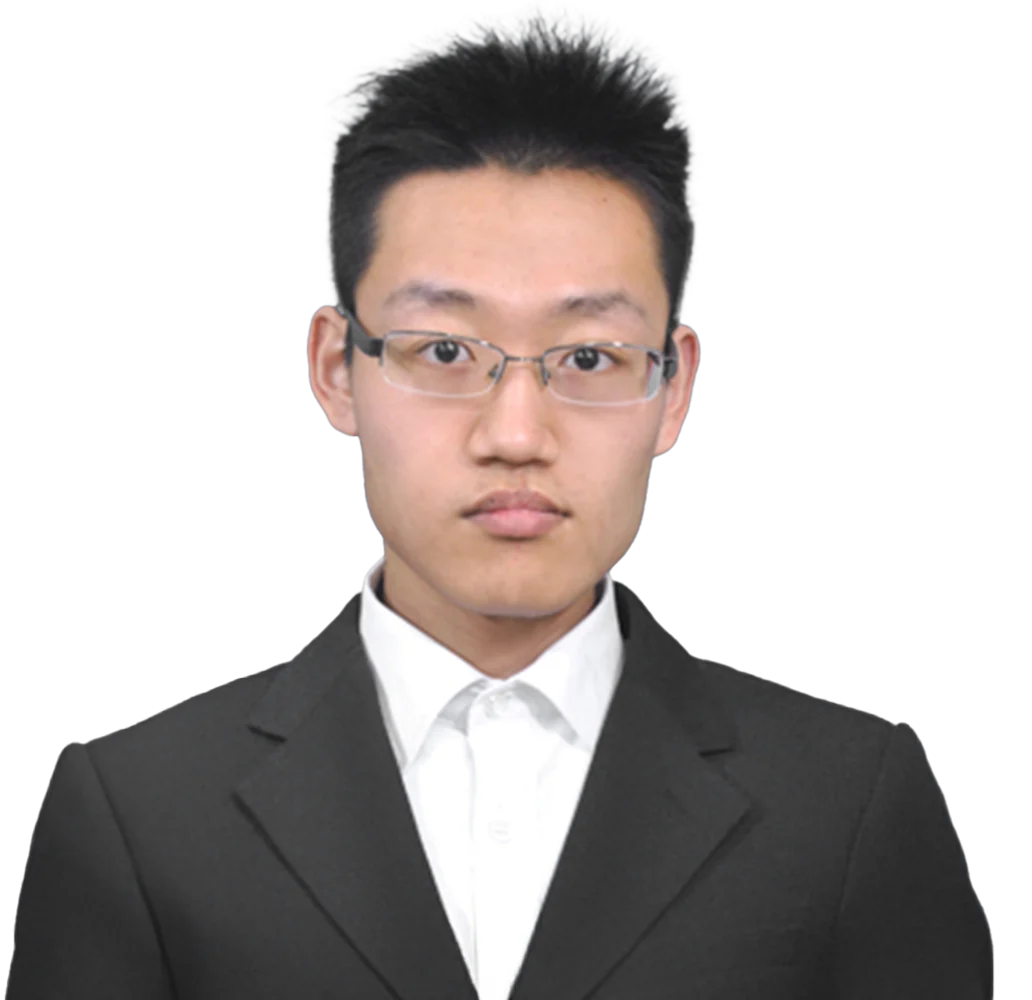
Principal investigator
A systems thinker.
A cell engineer.
Yapeng Su is launching the Su Lab in the Department of Pathology and Laboratory Medicine at the Perelman School of Medicine, University of Pennsylvania. The lab studies how T cells make fate decisions across space and time—and how those decisions can become design principles for cell therapy in solid tumors.
His research integrates systems immunology, single-cell and spatial multi-omics, CRISPR perturbation, quantitative modeling, metabolic engineering, and synthetic receptor and TCR-T design. The program connects high-dimensional measurement to causal experiments, then carries the resulting mechanism into therapeutic engineering.
Su trained with James Heath, Nobel laureate David Baltimore, and Leroy Hood in systems and cancer biology, and with Philip Greenberg and Raphael Gottardo in T-cell therapy and quantitative immunology.
Including NIH/NCI K99–R00, philanthropic fellowships, and institutional research support.
STAT Wunderkind, Damon Runyon Quantitative Biology Fellow, and Allen Institute Next Generation Leader.
With trajectories toward leading medical schools, PhD programs, residency, and biotechnology.
Current laboratory
The founding
roster.
The Su Lab is building its founding team at Penn. Meet the principal investigator and explore open paths for scientists who want to shape the laboratory from its beginning.
Principal Investigator
Yapeng Su, PhD
Systems immunology · cell engineering · quantitative biologyYapeng Su is launching the Su Lab in the Department of Pathology and Laboratory Medicine at Penn’s Perelman School of Medicine. He studies how T cells make fate decisions across space and time, combining molecular mechanism, single-cell and spatial measurement, quantitative modeling, and therapeutic engineering to design more durable TCR-T cells for solid tumors.
The next chapter
The first cohort will shape
how this lab thinks.
The Su Lab is launching at Penn. Early members will do more than join projects: they will help define the culture, methods, and scientific language of the laboratory.
Postdoctoral fellows
Lead ambitious programs spanning T-cell biology, functional genomics, spatial systems, or therapeutic engineering.
Graduate students
Build a rigorous interdisciplinary foundation while moving between experiments, computation, mechanism, and translation.
Research staff
Help create the experimental and computational backbone of a collaborative, technically fearless new laboratory.
Collaborators
Bring complementary clinical, engineering, imaging, chemical biology, or disease expertise to shared scientific questions.
How we work
Ambition with
intellectual generosity.
RIGOR×GENEROSITY×COURAGE=SCIENCE THAT LASTS
Think across scales
Move fluently from molecular circuits to cell states, tissue ecosystems, and therapeutic behavior.
Share ideas early
Generous critique and open collaboration make ambitious science sharper, faster, and more reproducible.
Make causality the standard
A beautiful map is a beginning. We perturb, validate, and engineer until the mechanism can carry weight.
Design for independence
Every trainee should leave with a scientific voice, a durable toolkit, and questions that are unmistakably their own.
These principles guide how we choose questions, run experiments, collaborate, and prepare each member for an ambitious next step.
Mentorship outcomes
Training measured
in trajectories.
Before opening the Su Lab, Yapeng mentored eleven undergraduate and postbaccalaureate researchers across Caltech and the University of Washington.
DC
FEATURED TRAINEE · 2018–PRESENT
Daniel Chen
From undergraduate research at the University of Washington to MD–PhD training at UCLA.
10Peer-reviewed papers
Co-first authorCell
JL
FEATURED TRAINEE · 2015–2024
Jihoon Lee
From undergraduate research at Caltech to residency training at Yale.
7Peer-reviewed papers
Co-first authorNature Biotechnology
YearsTrainee and starting pointWhere they are now
Jihoon LeeUndergraduate · Caltech
Resident physician · Yale
Marcus BintzUndergraduate · Caltech
PhD student · Harvard
Rachel NgUndergraduate · Caltech
PhD student · University of Washington
Annie ChenUndergraduate · Caltech
Yale PhD · Scientist at Illumina
Daniel ChenUndergraduate · University of Washington
MD–PhD student · UCLA
Lena WirthUndergraduate · University of Washington
PhD student · Yale
Emily ChenUndergraduate · University of Washington
PhD student · UCSF
Cody JenkinsUndergraduate · University of Washington
PhD student · University of Washington
Taylor HuUndergraduate · University of Washington
PhD student · Johns Hopkins
Uyen VuongUndergraduate · University of Washington
Current trainee
Jonah MiyashiroUndergraduate · University of Washington
Current trainee
Build something consequential
Bring your question.
Leave with a trajectory.
Tell us what you want to understand, what you know how to build, and what you hope to become.
Explore opportunities ↗